A technology leader was caught between two frustrated groups who couldn't understand each other. Business leaders kept asking why it took so long to change or update anything. Technology teams felt like they were drowning — requests never stopped coming and the list of to-dos never got shorter. Both were right, and both were exhausted. The problem wasn't capability or commitment. It was that the teams had said yes to far more than it could ever actually do because they didn't feel empowered to say no. With hundreds of active priorities and only a fraction completing each year, the pipes were clogged. Every team was busy. Almost nothing was moving.
This pattern is familiar at any scale — a church that has commited to too many events, a small organization can't say no to good ideas, a team that is genuinely working hard but can't point to what they've actually finished.
Before any decisions could be made, we needed to understand what was actually in the backlog — not just the list of priorities, but the human reality behind each one. Who asked for this? What problem were they trying to solve? Who would actually benefit? That work was intentional and relational. It meant talking to people, not just reading spreadsheets. And what emerged from it wasn't a ranked list — it was a map of the real problems the organization was trying to solve. Beneath hundreds of separate requests were a much smaller number of genuine underlying needs. Many teams were working on the same problems without knowing it. Significant effort was being duplicated. And some work, when held up against the actual problems it was meant to solve, turned out not to be necessary at all. For the first time, leaders could see the whole picture — not as a list, but as a coherent view of where their people and resources were actually going. That view made the hard choices possible. What had felt like an impossible prioritization problem became a much more manageable conversation about which problems mattered most right now.
The goal was never to cut work for the sake of cutting. It was to protect the work that actually mattered by being honest about what didn't.
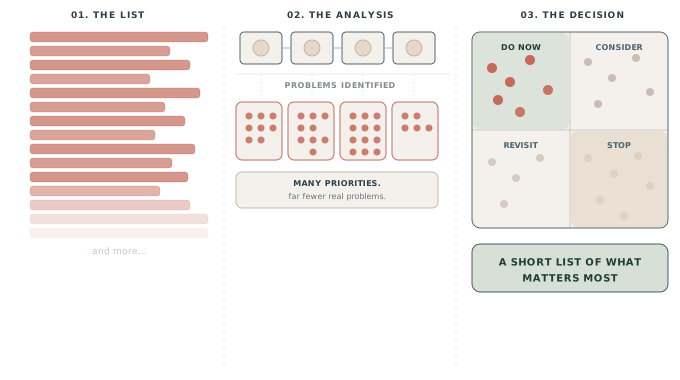
Leaders made a set of clear priorities — not a long list, but a short one. Teams that had been stretched across dozens of competing demands could finally go deep on the work that mattered. Delivery timelines shortened not because anyone worked harder, but because the leaders helped their teams stop dividing attention in so many directions at once. The result was less about what got cut and more about what finally got finished.