A B2B organization was growing quickly. New teams were forming, existing teams growing, and ambitious work began moving in parallel across the organization. But soon conflict began rising in planning sessions, new services being launch didn't meet expectations, and teams began competing for shared resources. The problem was that each team was building their own picture of how the work fit together — assuming other teams would handle what they weren't covering, while those teams were making the same assumption in reverse. No one had a shared view of the end-to-end process — internal or external. Everyone was moving fast, but not necessarily in the same direction.
Before any alignment could happen, we needed something every team could see themselves in. Starting with understanding their target audience, we built an experience framework — a consistent, shared map of the end-to-end process from the customer's point of view. It wasn't a top-down org chart or a project plan. It was a view of the world through the customer's eyes. From there, we brought each team to the framework — facilitating sessions where they could lay out their goals, their problems, and their planned work against this common view. What became visible almost immediately was where teams were duplicating effort, where they were leaving gaps, and where their timelines created unintended dependencies on each other. We then facilitated cross-team sessions at each of those intersection points, working through the details and timing that no one had explicitly negotiated before.
This pattern shows up across many kinds of organizations — anywhere teams serve the same person from different angles without a shared view of their experience.
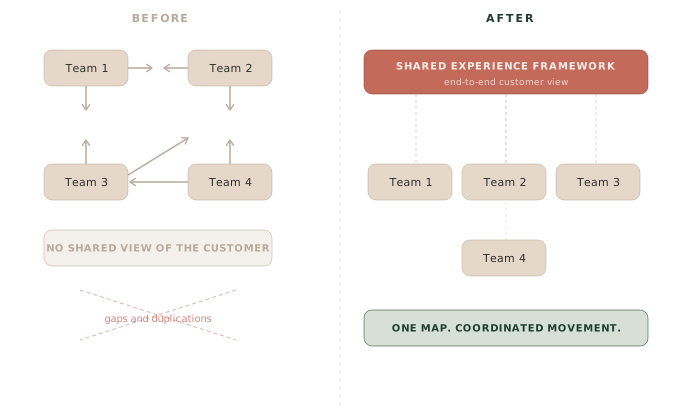
Teams that had been operating in parallel silos left with a clear picture of how their work connected to the whole. Duplicated efforts were consolidated, critical dependencies were surfaced and sequenced, and the team moved forward with a coordinated strategy rather than a collection of independent ones — all anchored to a consistent view of the customer experience they were trying to create. The result wasn't just better coordination — it was a shared language that gave every team a way to talk about their work in relation to everyone else's.